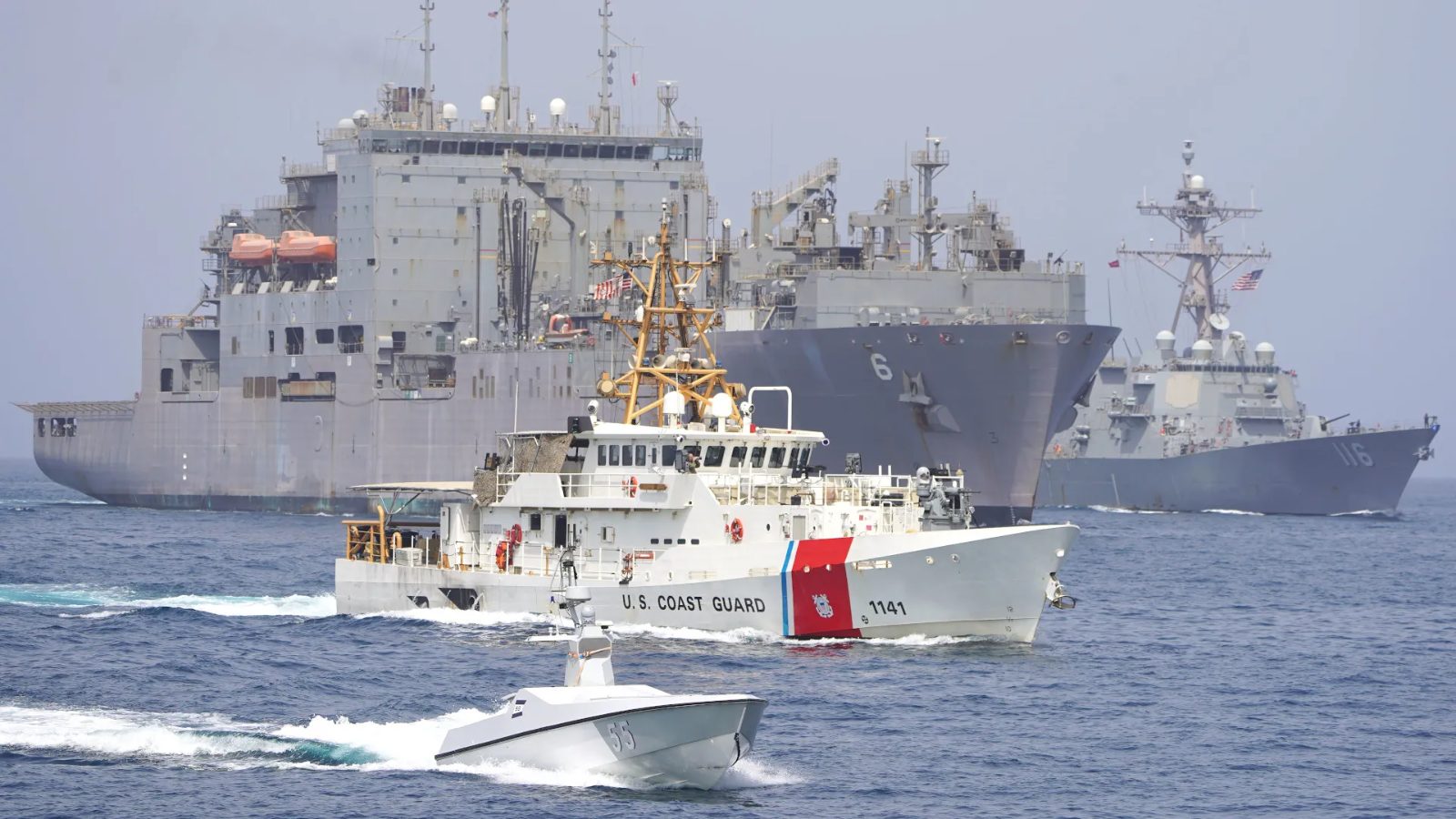
The United States has reinstated its naval blockade of Iranian ports, the US military announced Tuesday, as American forces carried out a fourth consecutive night of airstrikes against Iran and retaliatory attacks were reported across the Gulf region.
US Central Command (CENTCOM) said the blockade on vessels travelling to and from Iranian ports and coastal areas took effect at 4pm Eastern Time (1am Wednesday PKT), a day after President Donald Trump announced its reinstatement. The military said more than 20 US Navy warships and hundreds of aircraft are currently operating across the Middle East.
The blockade, first imposed in April and lifted in mid-June following an interim ceasefire agreement, returns as that deal unravels. Washington accuses Tehran of breaking the truce by attacking commercial shipping; the US military says Iran has struck seven commercial vessels in the past week. Iran's Revolutionary Guard acknowledged disabling two supertankers on Tuesday, claiming the ships had ignored repeated warnings while using what it called an illegal route through the Strait of Hormuz.
Ahead of the blockade's reinstatement, CENTCOM launched fresh strikes it said were aimed at degrading Iran's ability to target shipping in the strait. Iranian state media reported attacks on the port city of Bandar Abbas, locations near Sirik, Abadan, Mahshahr, and Qeshm and Kish islands.
Iran's retaliation spread across the region on Tuesday. Kuwait's armed forces said air defences intercepted hostile drones approaching from Iran, and four Kuwaiti naval personnel were wounded in an attack on a naval vessel. Iran also claimed strikes on US military facilities in Jordan, while Bahrain said it repelled an Iranian aerial attack. Qatar condemned the Iranian strikes on the three Gulf states as a violation of their sovereignty.
President Trump renewed his threat to bomb Iranian civilian infrastructure, including bridges and power plants, unless Tehran returns to the negotiating table, saying US strikes will "continue until I say it's enough." He also abandoned a proposed 20 percent fee on cargo transiting the Strait of Hormuz, saying Gulf states had instead offered trade and investment deals.
Iran's Deputy Foreign Minister Kazem Gharibabadi said the US had destroyed the memorandum of understanding signed in June and that Tehran no longer considers itself bound by any of its commitments, including on the Strait of Hormuz.
Why it matters for Balochistan
The escalation carries direct consequences for the region. The Strait of Hormuz lies just west of Pakistan's Makran coast, and Gwadar port sits within close range of the conflict zone. Renewed fighting threatens fishing communities operating in nearby waters, the informal fuel trade across the Pakistan-Iran border that sustains thousands of households in border districts such as Kech, Panjgur, Washuk and Chagai, and shipping activity at Gwadar. Rising crude oil prices driven by the conflict are also expected to add pressure on fuel costs across Pakistan.
Compiled from international news agency reports



Comments
Leave a Comment
Your comment will be reviewed before it appears publicly.