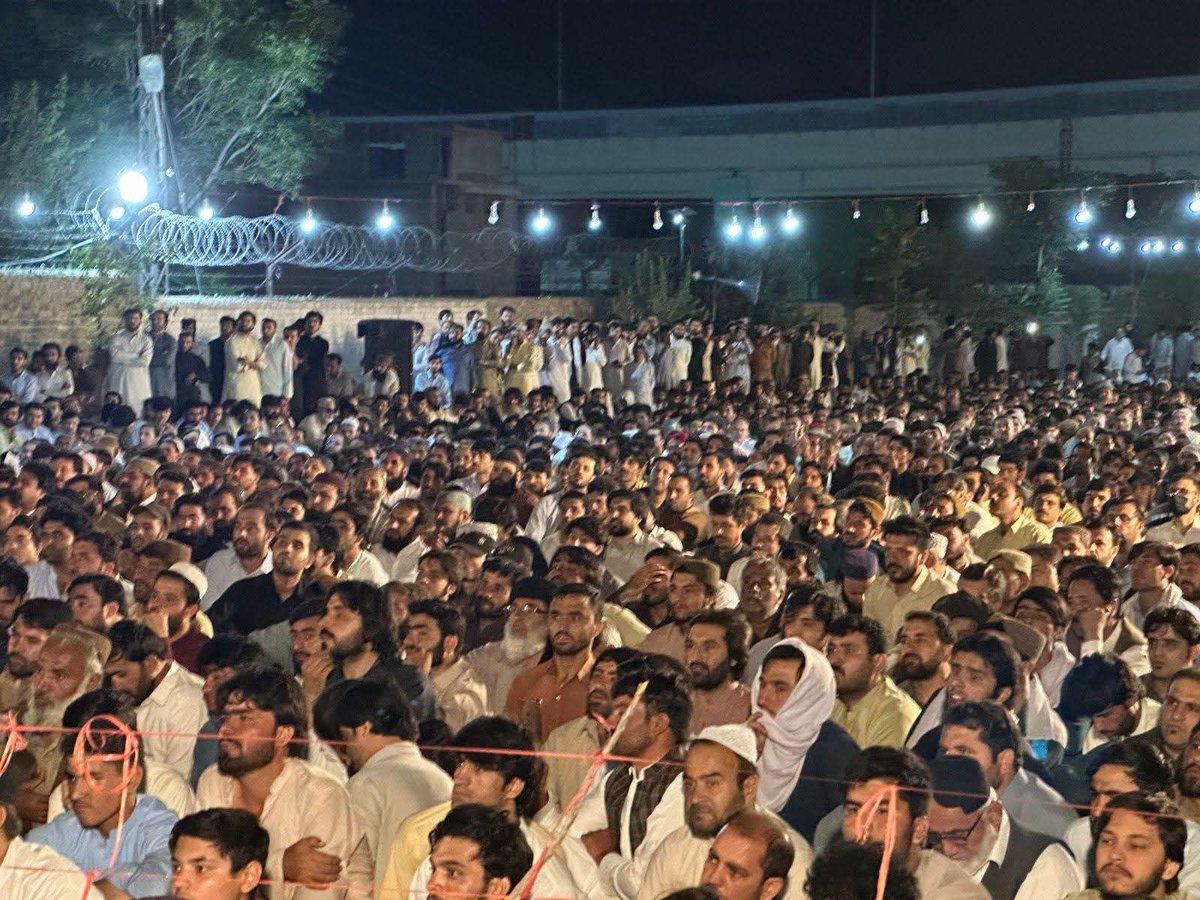
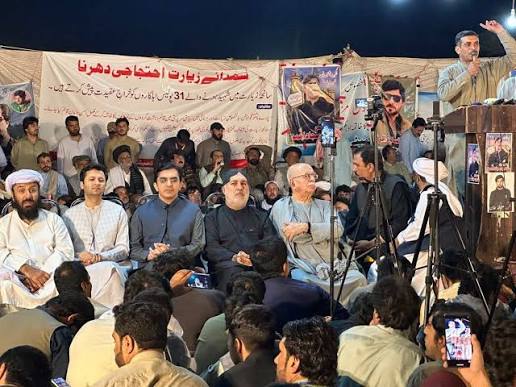
The coffins of seven policemen killed in this month's terrorist attack in Ziarat district remain unburied at Koila Phatak on Samungli Road, as a sit-in by their grieving families entered its sixth consecutive day on Tuesday with no breakthrough in talks between protesters and the provincial government.
What began as a roadside vigil by a handful of bereaved families has, over the past week, drawn in Balochistan's major nationalist and opposition parties, provincial ministers, and now solidarity actions spreading to other districts, turning a local tragedy into a province-wide reckoning over security failures in Balochistan.
Background: The Mangi Dam Attack
The crisis traces back to the night of July 6, when militants stormed a remote police checkpost in the Mangi area of Ziarat district, close to the site of the Mangi Dam water project built to supply Quetta. According to police and provincial officials, nine police personnel, including two station house officers, were killed in the initial firefight, along with the Anti-Terrorism Force in-charge. Security forces said 15 attackers were also killed in the exchange.
Before army reinforcements could reach the isolated post, retreating militants abducted a larger group of surviving officers. Those hostages were later executed, pushing the confirmed police death toll into the high twenties, provincial officials have cited a toll of 27 to 30 killed across the incident, among the deadliest single attacks on police in the province in recent memory. Five constables were initially reported missing before their fate was confirmed.
The Balochistan government's spokesperson, Shahid Rind, said a subsequent clearance operation, conducted jointly by the Frontier Corps, Balochistan Police, the Counter-Terrorism Department and other units, killed 15 militants belonging to the group the state designates as "Fitna al-Khawarij." The Ziarat attack has since been folded into a broader counter-insurgency campaign, Operation Shaban, whose cumulative toll, combining this and other recent incidents including an ambush on an army convoy in Lasbela, was reported by state media on Tuesday to have reached 88 militants killed, with 126 total deaths logged in related operations since July 5.
The attack drew swift condemnation from the top of the state. President Asif Ali Zardari and Acting President Syed Yousuf Raza Gilani both issued statements honouring the "martyrs," while Prime Minister Shehbaz Sharif travelled to Quetta to chair an emergency Apex Committee meeting on the province's security crisis and later said operations would continue "until terrorists are wiped out."
The Sit-in: A Timeline of Escalating Protest
Even before the bodies reached Quetta, residents in Ziarat had blocked the Quetta, Zhob highway (N-50) in protest, stranding passenger and freight traffic on the artery linking Balochistan to Khyber Pakhtunkhwa. A parallel protest also shut the N-70 link toward Punjab.
- July 8-9: As funeral processions were shifted from Ziarat's District Headquarters Hospital toward Quetta, families of the martyred officers refused to proceed to burial. Eight of the recovered bodies were carried to Koila Phatak Chowk on Samungli Road, where relatives began an open-ended sit-in, again cutting off the Quetta, Pishin, Ziarat road.
- July 11 (3rd day): The protest camp swelled as political leaders arrived to express solidarity, including Balochistan National Party (BNP-M) chief Sardar Akhtar Jan Mengal, Pakhtunkhwa Milli Awami Party (PkMAP) central secretary Abdul Rahim Ziaratwal, Awami National Party (ANP) Balochistan president Asghar Khan Achakzai, and PkMAP provincial president Nasrullah Khan Zayray. Late that night, on the directive of Chief Minister Mir Sarfraz Bugti, provincial Home Minister Mir Ziaullah Langove visited the camp for the government's first direct talks with the families.
- July 12-13 (4th day): Government and family representatives held formal negotiations, led on the state side by Langove alongside Health Minister Bakht Muhammad Kakar, Senator Manzoor Kakar, and district administration officials. The two sides failed to reach agreement; the government said it had, in principle, agreed to form a judicial commission to probe the attack. Former senator Nawabzada Haji Lashkari Raisani was among further political figures who visited the site.
- July 14-15 (5th, 6th day): The stalemate persisted into the new week. Langove renewed his appeal to the families to allow burial, arguing the government had "accepted most of their demands," while the families held firm, continuing to press for further commitments before agreeing to lay the bodies to rest. Mohsin dawar and Khushal Khan Kakar joined Sit in.
Throughout, the blockade at Koila Phatak has choked traffic across Quetta's Samungli Road, Shahbaz Town, Jinnah Town and Khojak Road corridors, compounding pressure on authorities to resolve the standoff quickly.
Government Response and Initiatives
Facing both a humanitarian standoff and a paralysed transport corridor, the provincial government has moved on several fronts:
- Judicial commission: Balochistan's government issued a formal notification constituting an inquiry committee empowered to summon officials, examine witnesses, inspect the attack site, obtain official records and seek expert opinion, with a 15-day deadline to report back, one of the protesting families' central demands.
- Direct negotiation channel: Home Minister Ziaullah Langove has led repeated rounds of talks, at one point conceding that "the martyrs and the people sitting on the dharna are our own," and pledging that "whoever is found responsible will be held accountable."
- Security escalation: Operation Shaban has continued in parallel, with state media reporting fresh militant casualties as recently as Tuesday, framed by officials as a direct response to the Ziarat killings.
- High-level engagement: Prime Minister Shehbaz Sharif's Apex Committee visit to Quetta signalled the attack's elevation to a national security priority, beyond a provincial law-and-order matter.
Despite this, families at the sit-in have continued to withhold burial, suggesting the commitments on offer have not yet met their full set of demands, which, based on the pattern of past Balochistan sit-ins over security incidents, typically include compensation, government jobs for next of kin, and firm accountability timelines rather than an open-ended inquiry.
Political Reaction and Rhetoric
The sit-in has become a platform for Balochistan's opposition nationalist parties to indict the wider state of security governance in the province.
Addressing the protest camp, BNP-M chief Akhtar Mengal delivered some of the sharpest criticism, demanding an independent and transparent probe and asking why no such investigation had followed the Ziarat killings or comparable past incidents. He argued that the state's own lack of confidence in its institutions was "one of the country's greatest tragedies," pointed to the failed history of dismantling and then merging the Levies force into the police, and accused successive governments of prioritising Balochistan's gas and mineral wealth over the welfare of its Baloch and Pashtun population. He also invoked unresolved cases such as the Quetta Civil Hospital attack as evidence that justice for the province's victims routinely stalls. Separately, Mengal took a sharper jab at federal Interior Minister Mohsin Naqvi over an overseas trip, suggesting the minister should instead be found "an SHO who could deal with us", a swipe at what he called federal neglect of domestic security crises.
At the national level, the opposition alliance Tehreek-e-Tahafuz-e-Ayeen-e-Pakistan (TTAP), led by Mahmood Khan Achakzai, has folded Ziarat into its broader confrontation with the Shehbaz Sharif government. Announcing a countrywide protest movement to begin August 5, Achakzai alleged that police personnel at the Mangi Dam post had been deployed with inadequate ammunition and that no official had been held accountable for the lapse. TTAP has said it will not let the Balochistan situation be overshadowed by other crises, including the political standoff in Azad Jammu and Kashmir.
Where Things Stand
As of thursday, July 16:
- The sit-in is in its seven day, with seven coffins still unburied at Koila Phatak.
- No agreement has been reached despite the government's offer of a judicial commission and acceptance of "most" family demands, per Home Minister Langove.
- Solidarity is spreading geographically: the All Parties Kech Alliance has announced a peaceful protest rally for Wednesday outside the Turbat Press Club, extending the moment beyond Quetta into Makran.
- Operation Shaban continues in the background, with the state-reported militant death toll climbing to 88 as of Tuesday, a parallel track officials hope will bolster public confidence even as the political and humanitarian standoff in Quetta remains unresolved.
The coming hours are expected to bring another round of talks between the Langove-led government team and family representatives. Until either side moves, Koila Phatak, and the highway running through it, will remain shut, and seven families will keep watch over coffins they have refused, for six days running, to bury.

Comments
Leave a Comment
Your comment will be reviewed before it appears publicly.