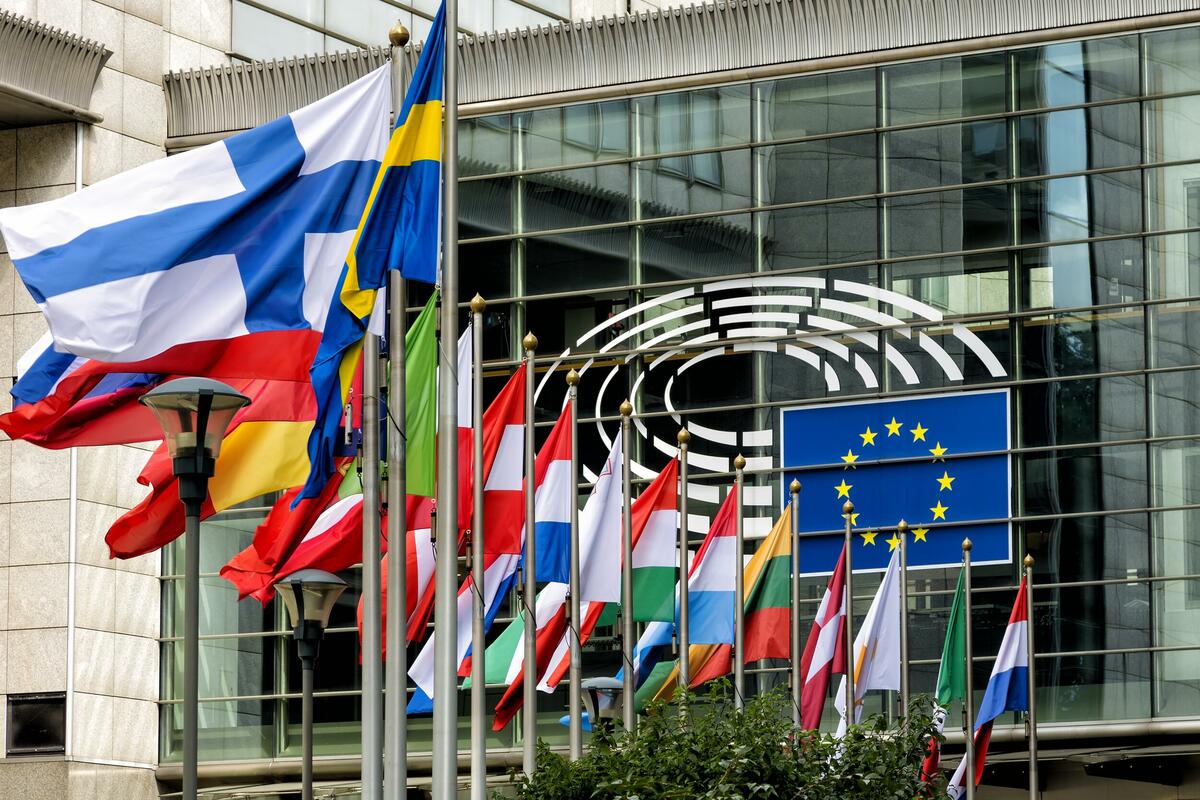
A joint staff working document issued by the European Commission and the High Representative of the Union for Foreign Affairs and Security Policy has flagged a deterioration in Pakistan's human rights situation over 2023-2025, with enforced disappearances, minority rights, media freedom and freedom of assembly singled out as areas of concern, and Balochistan repeatedly cited as among the worst-affected regions.
The document, dated Brussels, July 16, 2026 and numbered SWD(2026) 184 final, forms part of the EU's assessment of Pakistan under the Special Incentive Arrangement for Sustainable Development and Good Governance, commonly known as GSP+, and accompanies a joint report to the European Parliament and the Council on the Generalised Scheme of Preferences covering 2023-2025.
Enforced disappearances
The report said that despite some positive developments, "grave concerns remain as significant systemic challenges persisted" in implementing human rights conventions, with the situation deteriorating in particular around enforced disappearances, minority rights, media freedom, freedom of expression and peaceful assembly. It said impunity for human rights violations continued to be a major concern, and noted that the European Commission had received a Single-Entry Point (SEP) complaint relating to Pakistan in 2025.
According to the report, there has been a high and growing number of enforced disappearance cases, particularly in Balochistan and Khyber Pakhtunkhwa, alongside reports of extrajudicial executions. It said Pakistan's Commission of Inquiry on Enforced Disappearances had been ineffective in determining the whereabouts of missing persons or securing accountability, and that there had been no prosecutions for enforced disappearances to date.
The document said the Commission had closed more than 9,000 cases without finding evidence of state involvement in any of them, and that when a case is closed on the grounds that the person has "returned home" or is deceased, the Commission does not record what happened to the individual during the period they were missing. It said Pakistan had compensated some families of victims, but without a clear procedural framework, and that the government had indicated it did not intend to introduce specific legislation criminalising enforced disappearances, arguing that existing laws already covered such acts, a position the report noted ran contrary to repeated recommendations by UN treaty bodies, including in reviews under the Convention Against Torture and the ICCPR.
Detention laws and Balochistan
The report said recent amendments to the Anti-Terrorism Act and related legislation in Balochistan and Punjab "appear to authorise preventive, arbitrary detention without charge or trial and without meaningful judicial review or effective remedies." It said this legislation, together with laws such as the Actions (in Aid of Civil Power) Regulation, risked blurring the line between legitimate law enforcement and enforced disappearances, and could be applied in a discriminatory or disproportionate manner against minorities, political dissidents, human rights defenders, journalists, students and family members of victims.
Torture and custodial deaths
The implementation rules of the Torture and Custodial Death (Prevention and Punishment) Act, approved in November 2025, were described in the report as an important step despite shortcomings in the act itself. It said the government had begun training law enforcement and judicial officials, but that data on complaints, investigations and prosecutions in torture cases had yet to show a clear trend, and that concerns remained over the use of evidence obtained under torture in court proceedings.
Political rights and fair trial
The report said political rights had been negatively affected by what it described as abusive judicial proceedings and the detention of opposition supporters and leaders, including a former prime minister, with concerns raised over fair trial standards and detention conditions, including access to lawyers, visitors and medical assistance. It said military trials did not meet the requirements of Article 14 of the International Covenant on Civil and Political Rights, which guarantees the right to a fair and public trial before an independent, impartial and competent court, along with adequate legal representation.
Media freedom
Limitations on freedom of expression and access to information "remained serious and persistent" during the reporting period, the report said, adding that Pakistan's media freedom had deteriorated further despite the adoption of the Protection of Journalists and Media Professionals Act. It cited a growing hostile and dangerous working environment for journalists, including reports of intimidation, administrative and judicial harassment, and violence against journalists covering sensitive subjects. The report also flagged the use of targeted litigation, or strategic lawsuits against public participation (SLAPPs), to obstruct journalists and lawyers.
It said laws including the Pakistan Electronic Crimes Act (PECA), along with criminal defamation, blasphemy, sedition and counter-terrorism legislation, contained vague definitions of hate speech, defamation, terrorism and false news, and that the absence of effective safeguards against misuse had produced a "significant chilling effect" on dissidents, journalists, human rights defenders and members of ethnic or religious minorities. Internet connectivity, the report said, was also frequently restricted, particularly around the 2024 elections, in Balochistan, and before and during protests.
Blasphemy laws and minorities
The report said Pakistan's blasphemy laws continued to have a negative impact on freedom of expression and disproportionately affected religious minorities. While authorities pointed to existing legal safeguards, provincial standard operating procedures and judicial oversight as measures to curb misuse, the report said these had proved ineffective, citing persistent procedural delays, intimidation and extrajudicial violence linked to blasphemy cases. It said there had been no prosecutions for false blasphemy accusations to date, and noted that the laws were also being misused for personal gain, citing a so-called "blasphemy business group" that had entrapped more than 800 people, mostly young men, through online scams. The report said the network appeared to have been dismantled, but that as of April 2026, more than 300 people falsely accused as part of the scheme remained in jail.
The document acknowledged that Pakistan had approved a Policy on Interfaith Harmony and a Strategy on Religious Tolerance in February 2025, but said the effectiveness of these measures had yet to be established, with hate speech against minorities remaining a widespread challenge. It said minorities faced varying degrees of discrimination, individual attacks, mob violence and destruction of places of worship, and that limited prosecution for hate crimes had created a sense of impunity for perpetrators. The report further said Pakistan's legal system and political discourse lacked a comprehensive concept of "minorities," noting that by limiting the term to non-Muslims, the framework failed to adequately capture discrimination against non-majority Muslim communities as well as ethnic or linguistic minorities.
Ahmadi Community , the report said, were subject to particular discrimination and violence, including criminal cases brought under discriminatory legislation that prevents them from identifying with or practising their religion, the desecration of mosques and graves, in several instances reportedly with the direct involvement or acquiescence of law enforcement and local authorities, and attacks against individuals, including targeted killings. It said a range of administrative measures had also had a negative impact on the civil rights of Ahmadis.
Child rights and education
The report described the rights of the child as remaining "extremely fragile" despite ongoing efforts, noting that Pakistan has a very high rate of out-of-school children by international comparison, with 26 million children aged five to 16-38 percent of the total school-age population, currently out of school. Citing the International Labour Organization's Committee of Experts on the Application of Conventions and Recommendations (CEACR), the report said education was key to preventing child labour and called for stepped-up efforts to improve access to free basic education for all children, taking into account the particular situation of girls.
The joint staff working document accompanies the European Commission and the EU High Representative's joint report to the European Parliament and the Council on the Generalised Scheme of Preferences covering 2023-2025, and forms part of the EU's periodic assessment of Pakistan's compliance with the international conventions underpinning its GSP+ trade status.
Comments
Leave a Comment
Your comment will be reviewed before it appears publicly.