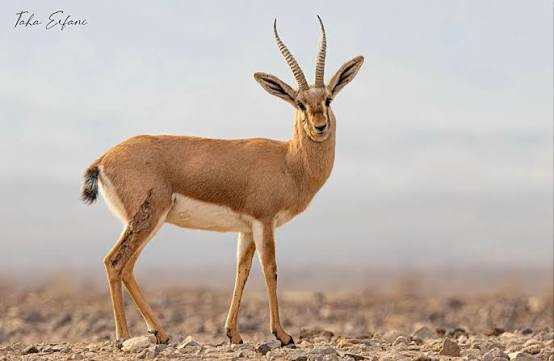
In a promising sign for wildlife conservation in Balochistan, a large herd of approximately 15 Chinkara (Indian Gazelles) was recently observed in the Tali Matt area of Sui, District Dera Bugti.
According to the Livestock Officer of Dera Bugti, the sighting of such a large group is highly encouraging and suggests that the region may support a much larger population than previously estimated. "We witnessed around 15 Chinkara moving together in a single herd. This indicates that there could be hundreds more inhabiting the surrounding landscape," the officer said.
The Chinkara (Gazella bennettii), also known as the Indian Gazelle, is a medium-sized antelope native to the arid and semi-arid regions of the Indian subcontinent, including Pakistan. The species is well adapted to the harsh desert environment of Balochistan, where it survives on sparse vegetation and can endure long periods without direct access to water.
Recognized by its slender body, light tan or reddish-buff coat, white underparts, and distinctive dark facial stripes, the Chinkara is known for its exceptional speed and agility. Although they are commonly seen alone or in small groups, larger herds are occasionally observed where habitat conditions remain favorable and human disturbance is limited.
Wildlife experts consider the sighting an encouraging indicator of improving habitat conditions in parts of Dera Bugti. The presence of a healthy Chinkara population also reflects the ecological importance of the Tali Matt landscape, which continues to provide refuge for native wildlife despite environmental pressures.
Conservationists have called for stronger protection of the area to prevent illegal hunting, habitat degradation, and unchecked human activities that could threaten the species. They stress that continued monitoring and community-based conservation efforts will be essential to ensure that the Chinkara population continues to thrive in the region.
The latest sighting serves as a reminder of Balochistan's rich biodiversity and highlights the need to safeguard its unique wildlife for future generations.

Comments
Leave a Comment
Your comment will be reviewed before it appears publicly.