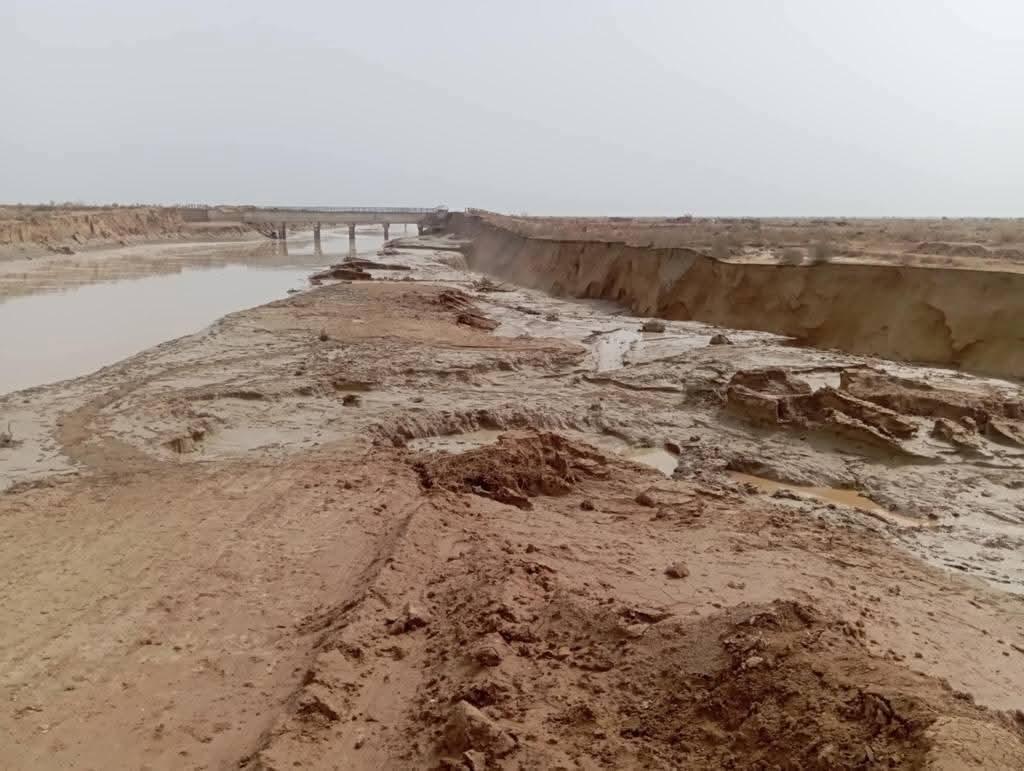
For the second time in four years, the fields around Sui are green again, but the men who farm them are not celebrating. When water was restored to the Kachhi Canal in 2025 after a two year suspension, farmers here had expected relief. Instead, they found a familiar pattern: patchy, damaged distributaries, an administration headquartered a hundred kilometres away in Naseerabad, and a canal system still functionally absent from the very district it was meant to transform first.
A project two decades in the making and still not delivered
The Kachhi Canal Project was conceived in 2002 as one of Pakistan's most ambitious irrigation schemes: a 500 kilometre channel drawing water from the Taunsa Barrage on the Indus to irrigate roughly 720,000 acres across Dera Bugti, Naseerabad, Sibi and Jhal Magsi some of Balochistan's poorest districts. More than two decades and a budget that has ballooned from an initial Rs 32 billion to over Rs 80 billion later, the project remains incomplete. Phase I alone was meant to be finished by 2007.
Then came the 2022 floods. Pakistan's worst monsoon disaster in decades 1,700 dead nationwide, roughly $40 billion in damage, and Balochistan among the hardest hit provinces tore through the Kachhi Plains. The canal's 363 kilometre main channel suffered extensive damage; engineering assessments later found that the original design had failed to account for the volume of hill torrent flash flooding that pours down from the Koh-e-Sulaiman range every monsoon. Independent evaluations of the project since have concluded that the 2022 damage effectively reset years of socio-economic gains, pushing indicators in the command area back to where they stood before the canal ever operated.
Sui's farmers, who spoke to the Dispatch, describe a more granular version of that collapse: two full years without water, tens of millions of rupees in losses across landholdings, and when water was finally, partially restored in 2025 a system still vulnerable to the same unresolved flaw. Floodwater from the Punjab side of the catchment, they say, continues to breach the canal each monsoon, and all fifteen of the canal's distributary branches serving the area have been damaged at one point or another. Farmers describe repairing several branches themselves, at their own expense, simply to bring a fraction of their land back under cultivation and even that limited revival, they say, covers far less area than in previous years.
The human cost, measured in idle land and lost seasons
It is difficult to put a precise rupee figure on what two lost growing seasons mean for a farming community, but the shape of the loss is not in dispute. Agriculture in the Kachhi Plains depends on a narrow, once a year window when canal or floodwater is available to saturate fields for a single crop cycle; miss that window, and there is no second chance until the following year. A canal suspended for two years is not a delayed harvest it is two harvests that never happened, on land that was supposed to be among the most productive in the province.
The provincial context makes the stakes sharper. Balochistan has the lowest share of any province under the 1991 Water Apportionment Accord and only a small fraction of its land is cultivable to begin with, which is precisely why the Kachhi Canal was designed to be transformative rather than incremental. Projections made when the project was still on track suggested the completed canal could have generated several hundred thousand jobs in the districts it was meant to serve. Every year of delay, and every acre left fallow by flood damage or by water diverted elsewhere, is a direct subtraction from that promise measured not in abstractions but in unemployed young men, in landowners liquidating assets to cover losses, and in villages that continue to rely on saline groundwater for drinking water because the canal that was supposed to change that has still not reached them in any durable way.
"The canal is only building Sui so why isn't its office in Sui?"
The grievance that animates farmers most, however, is not the flood damage itself but what they describe as an administrative arrangement that leaves them powerless to fix it. The Kachhi Canal's offices and its officers, they say, are based in Naseerabad while the canal's actual construction and irrigation work in Sui, covering more than 100,000 acres of farmland, has barely materialized. Farmers argue this is not a minor bureaucratic detail: an office located far from the command area means field problems go unseen, complaints take longer to reach anyone with authority, and crucially that jobs tied to canal maintenance, including lower tier maintenance postings that farmers say should by right have gone to unemployed local youth, were instead allocated to residents of Naseerabad.
This is a familiar complaint in Pakistani irrigation bureaucracy, where project offices are frequently sited for administrative convenience rather than proximity to the communities they serve but it takes on particular weight in a district where unemployment and a sense of state neglect are already acute, and where a public sector maintenance job is one of the few forms of tangible government presence residents ever see.
Water diverted upstream, complaints directed downstream
Farmers also allege a second, ongoing drain on the canal's already scarce water: unauthorized lift pumps operating across parts of Punjab within the canal's catchment, drawing water intended for downstream command areas including Sui. They describe this as widespread and effectively unpoliced "thousands of pumps," in their words even as they say they are the ones who routinely receive written notices and administrative pressure over canal related complaints. The asymmetry, as farmers frame it, is stark: no visible enforcement against upstream water theft, but consistent scrutiny directed at the downstream farmers who are its victims.
Why this compounds Balochistan's broader problem
None of this is happening in a vacuum. Analysts who have studied the Kachhi Canal's troubled history have called it more than a missed economic opportunity describing it as a broken promise that deepens a sense of alienation in a province already contending with insurgency and chronic underdevelopment, where infrastructure elsewhere in the country moves at a markedly different pace. Every additional year the canal remains incomplete, and every administrative decision that keeps its authority physically and functionally distant from the community it is meant to serve, adds evidence to a narrative that is corrosive on its own terms: that state institutions extract budget and personnel from a resource producing area while withholding the resource itself.
What would actually change this
Drawing on what farmers, engineers and independent evaluators have identified, four measures stand out as the ones that would materially change outcomes on the ground, rather than simply generate another round of announcements:
- Relocate Kachhi Canal's operational office and field staff to Sui. An office based in the command area, rather than 100 kilometres from it, is a basic precondition for responsive maintenance and for local hiring not a cosmetic gesture. This is the single change farmers most consistently ask for, and it is the cheapest to implement, since it requires no new construction, only a decision.
- Commission an independent structural review of the flood-vulnerable sections and branches 1 through 15, specifically addressing the hill-torrent flooding the original design failed to anticipate, so that repairs are engineered against the actual flood regime rather than repeated on an emergency basis each monsoon.
- Audit and enforce against unauthorized lift-pump extraction along the canal's Punjab side catchment, with the same administrative energy currently directed at downstream farmers. Water accounting knowing where the canal's water is actually going is a prerequisite for any credible claim that Sui's shortages are due to flood damage alone rather than upstream diversion.
- A dedicated relief package for Sui's flood and drought-affected farmers, of the kind the provincial government has extended to other calamity hit areas, rather than the routine notices farmers describe receiving instead.
None of these require the Rs 80 billion still being sought for the canal's unfinished phases . they require a decision to treat Sui as the intended beneficiary of a project built in its name, rather than as a service area administered from somewhere else.
The Balochistan Dispatch will continue reporting on the Kachhi Canal and welcomes documentation photographs, repair records, or official correspondence from farmers and officials willing to go on record.


Comments
Leave a Comment
Your comment will be reviewed before it appears publicly.