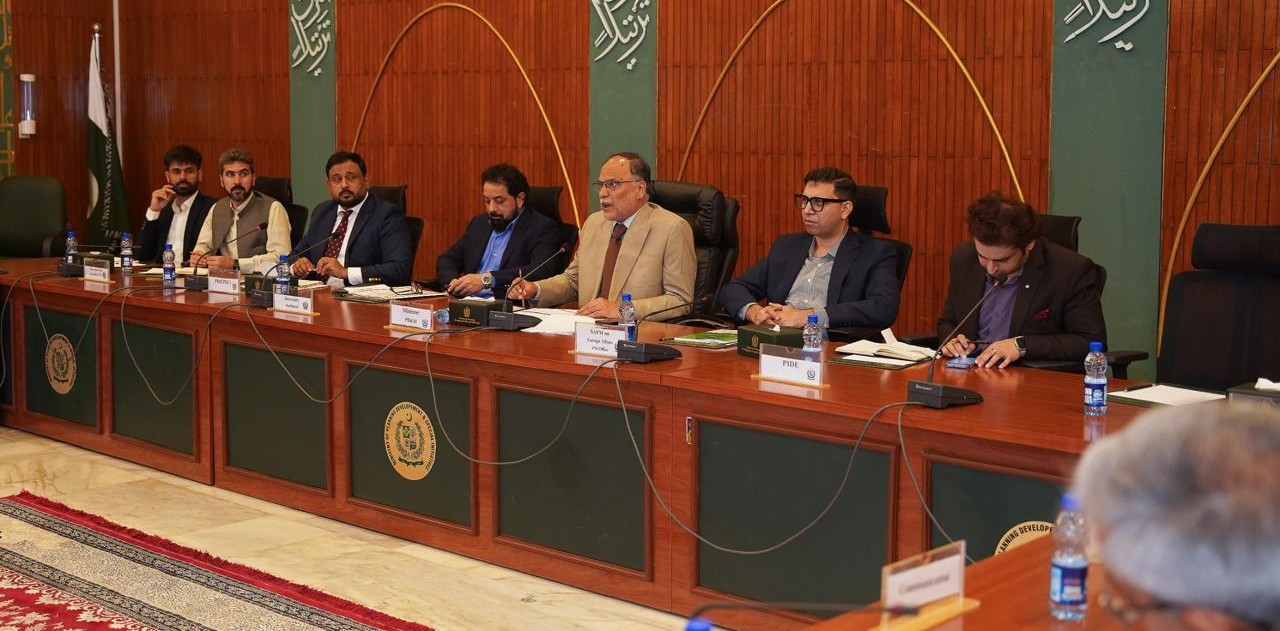
The federal government has directed its ministries, provincial administrations and project agencies to speed up work on the second phase of the China-Pakistan Economic Corridor, at the 91st CPEC progress review meeting held in Islamabad on August 4.
Chairing the session, Federal Minister for Planning, Development and Special Initiatives Ahsan Iqbal said CPEC 2.0 would advance through its Five Corridors framework Innovation, Livelihood, Openness, Green and Growth and instructed that each corridor be backed by a long-term development plan with defined priorities, measurable outcomes and a clear implementation mechanism.
The meeting reviewed progress with the relevant ministries, provincial governments, public-sector bodies, regulators, academic institutions, project entities and Pakistan's mission in Beijing. It also pressed for compliance with security and operational requirements, stronger participation from stakeholders, timely inter-ministerial coordination, and prompt execution of agreements and contracts measures the ministry framed as necessary to protect investor confidence and keep projects on schedule.
The review is a routine governance checkpoint rather than a decision-making forum, and the readout announced no new projects, financing or timelines.
For Balochistan, the substance of CPEC 2.0 lies inside these corridors rather than in the language of the meeting itself. Gwadar's port and free zone, the province's minerals, and its water and coastal economy all fall under the Livelihood, Growth and Green headings which means the province's stake in the second phase turns less on how often progress is "reviewed" in Islamabad and more on whether the corridors named here translate into delivery on the ground. That remains the open test for a province where a decade of CPEC has produced measurable infrastructure but uneven local benefit.
Published in Balochistan Dispatch, August 5th, 2026



Comments
Leave a Comment
Your comment will be reviewed before it appears publicly.