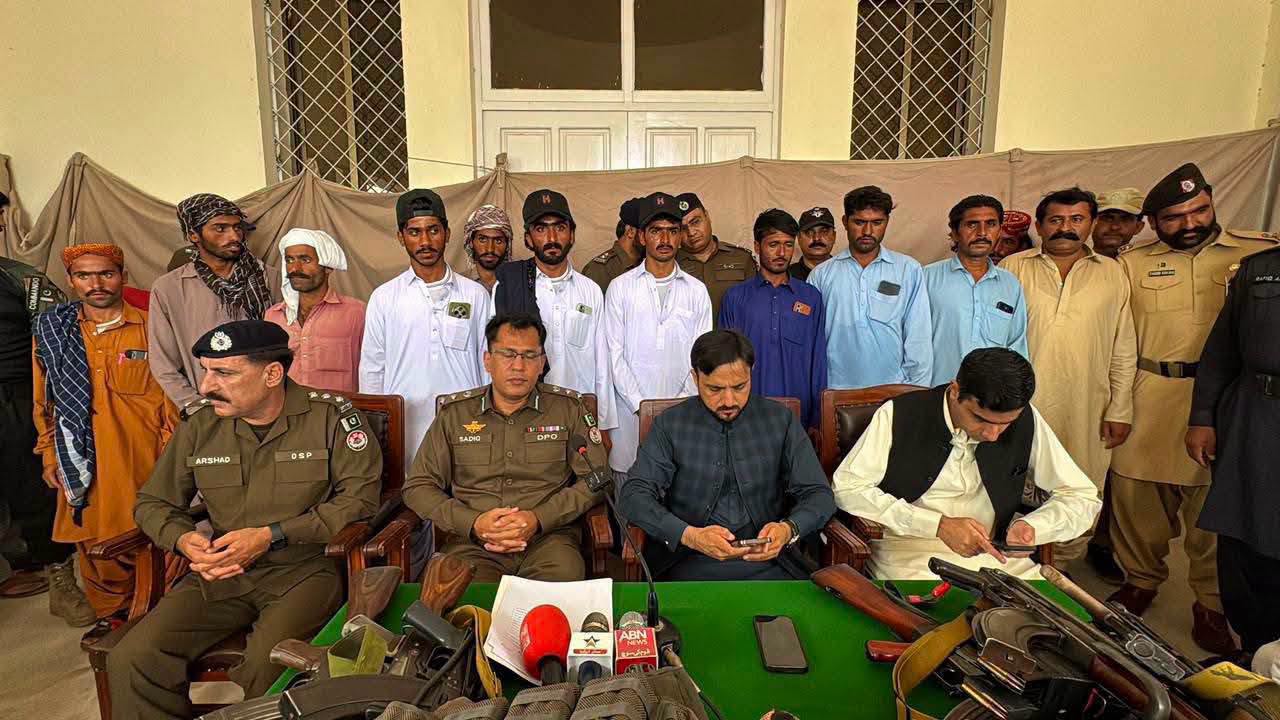
A few days ago, the notorious Ladi gang surrendered to law-enforcement agencies in the tribal area of Dera Ghazi Khan. The gang was allegedly wanted in more than 200 criminal cases, ranging from murder to extortion. Their surrender brought relief to victims and local residents, but it also raises pressing questions about the state and its policies toward crime and criminality.
How will the trial of the surrendered members proceed?
Do the state and its institutions have adequate rehabilitation facilities for such proclaimed offenders?
These questions remain unanswered. There is another deeply disturbing aspect of the Ladi gang: unlike the dacoits of the Katcha riverine belt, the Ladi gang did not emerge from an old inter-tribal enmity. How, then, did this group evolve and become so notorious and violent?
The answer lies largely in geography and socioeconomic context. The area in which the gang operated is marked by surging poverty and deep illiteracy. Dera Ghazi Khan is the second most illiterate district in Punjab.
These long-standing conditions;poverty, lack of education, and systematic neglect ; create fertile ground for criminal enterprises.
Criminality in such contexts is not simply a policing problem; it is a symptom of broader social and economic failure.
To prevent the emergence of another Ladi gang, the government must address those root causes. That requires sustained investment in education, expanded social protection programmes, and targeted public spending to alleviate poverty in peripheral districts. Strengthening institutions that offer alternatives to crime; vocational training, reliable schooling, youth engagement, and mental-health and rehabilitation services must accompany improved policing and fair, transparent justice.
Only by raising general welfare and expanding citizens' confidence in state institutions can the writ of the state be secured in neglected areas. Short-term security gains from arrests and surrenders will not suffice unless they are linked to a long-term strategy for social uplift and inclusive development.
Published in Balochistan Dispatch, July 27th, 2026


Comments
Leave a Comment
Your comment will be reviewed before it appears publicly.