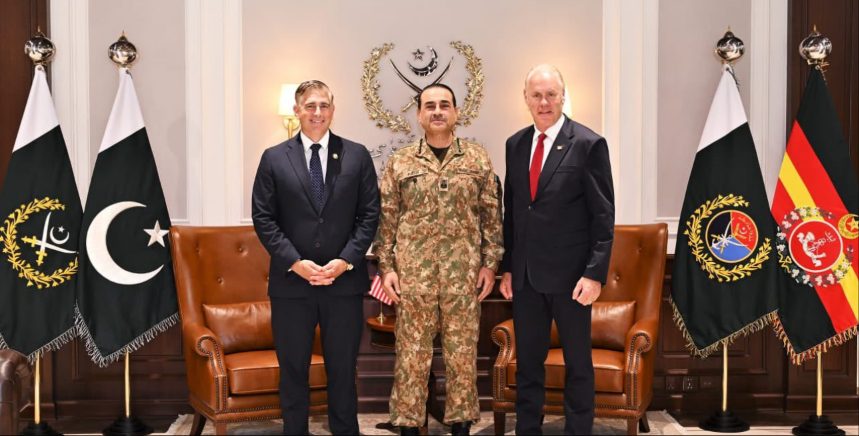
Two members of the US House of Representatives called on Field Marshal Syed Asim Munir, the chief of army staff and chief of defence forces, at the General Headquarters in Rawalpindi on Monday, the military's media wing said, in talks that touched on regional security, defence cooperation and economic ties.
According to the Inter-Services Public Relations (ISPR), the delegation comprised Representative Ryan Zinke of Montana and Representative Michael Baumgartner of Washington. The discussions, it said, focused on matters of mutual interest, bilateral defence cooperation and avenues for enhancing economic collaboration, with Munir describing sustainable regional stability as closely tied to economic growth, trade and connectivity, and pointing to reforms aimed at attracting foreign investment.
The official readout offered no further detail, and did not reference any specific investment or security arrangement.
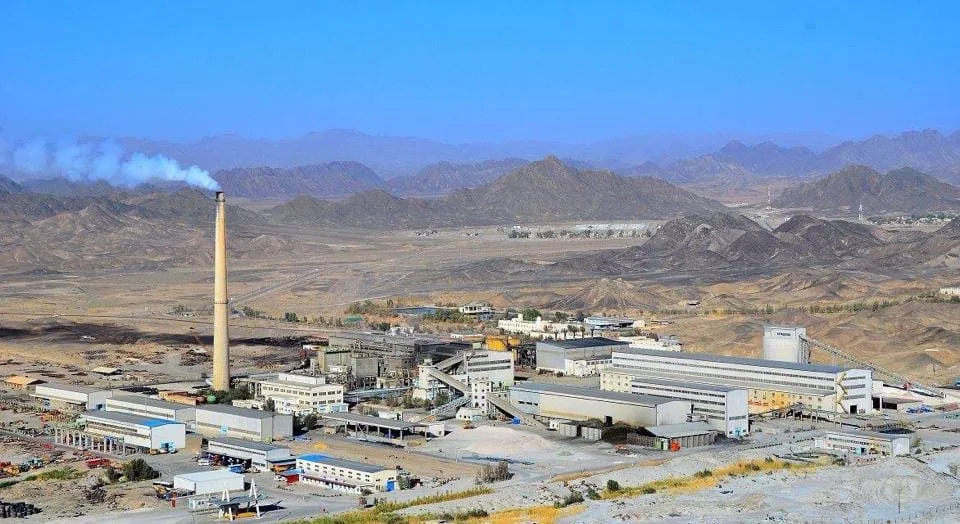
The visit comes as Washington moves to deepen its involvement in Balochistan's mineral sector. In December 2025, the US Export-Import Bank approved $1.25 billion in financing tied to the Reko Diq copper and gold project one of the largest US financing decisions in Pakistan's minerals sector which US officials said could unlock up to $2 billion in American mining equipment and services and generate thousands of jobs in both countries. Reko Diq, in Chagai district near the Iran border, is a joint venture between Canada's Barrick Gold and the Pakistani federal and provincial governments, with production targeted for 2028; Saudi Arabia's Manara Minerals has signalled interest in a stake.
The province where that wealth lies remains the site of a long-running separatist insurgency. In August 2025, the US State Department designated the Balochistan Liberation Army and its Majeed Brigade as Foreign Terrorist Organisations, having listed the BLA as a Specially Designated Global Terrorist entity in 2019. The group has claimed a series of high-casualty attacks, including the March 2025 hijacking of the Jaffar Express.
The growing foreign footprint in Balochistan's resources Chinese-led at Gwadar and Saindak, and now US-backed at Reko Diq has long drawn criticism from Baloch nationalist parties and rights activists, who argue that decades of extraction have brought the province little in the way of local benefit or say over its own resources. The government maintains that projects such as Reko Diq will deliver revenue, jobs and development to the province.

Comments
Leave a Comment
Your comment will be reviewed before it appears publicly.