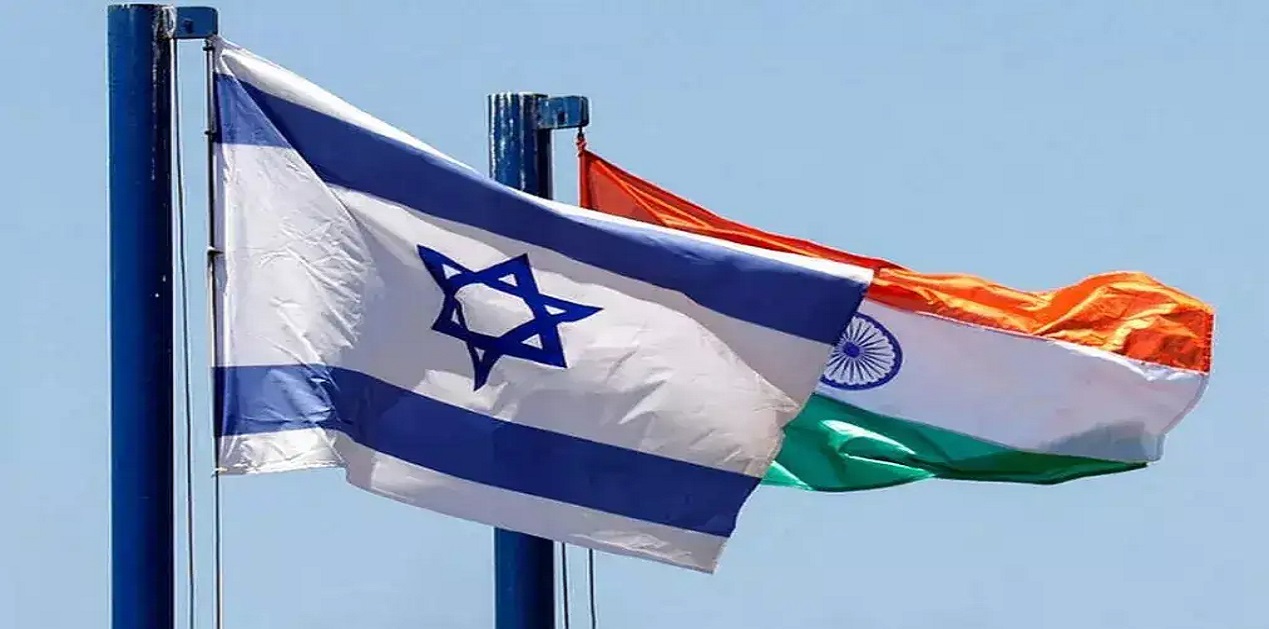
India continued to export weapons, ammunition and military components to Israel throughout the war in Gaza, sending at least 2,596 shipments after 7 October 2023 despite what a leading rights body says was a clear risk the goods could be used in serious violations of international law, according to a new Amnesty International report.
The 42-page report, Made in India: The Supply of Weapons and Ammunition to Israel, published in late July, draws on shipment-level trade records to trace how Indian-made arms, parts and components reached large Israeli firms that supply the country's military. Amnesty says the transfers continued long after the International Court of Justice warned, in early 2024, of a plausible risk of genocide against Palestinians in Gaza ; a characterisation Israel firmly rejects.
https://x.com/amnesty/status/2082783165932814655?s=20
Between 7 October 2023 and 30 November 2025, the organisation says it documented at least 390,516 components for military-grade small arms, 564,970 parts for explosive ordnance including drone warheads and artillery shell casings and 298 military-vehicle components. Amnesty said it deliberately set aside shipments likely destined for civilian use, as well as items associated with anti-missile defence systems often used to protect civilians, and described its methodology as conservative, saying the true scale is probably larger.
The report names nine Indian companies, spanning state-owned manufacturers, private firms and Indo-Israeli joint ventures. Among them are the state-owned Munitions India Limited, which makes high-explosive artillery rounds; PLR Systems, a joint venture between Adani Defence & Aerospace and Israel Weapon Industries, which produces machine-gun parts; Kalyani Systems, a Bharat Forge subsidiary that makes artillery rounds and casings; the firearm-components maker Indo MIM; and Alpha Elsec Defence & Aerospace Systems, a joint venture with Elbit Systems that manufactures explosive warheads. Because several suppliers are owned and controlled by the Indian state, Amnesty argues, the transfers engage India's own obligations under international law.
Among the items its investigators traced were machine-gun components, 155mm high-explosive artillery shells supplied to Elbit Systems, and explosive warheads for the Skystriker loitering munition a so-called kamikaze drone resembling debris recovered from Khan Younis in Gaza. The Israeli recipients named include Elbit Systems, Rafael Advanced Defense Systems and Israel Aerospace Industries, which Amnesty describes as central to Israel's military supply chain.
Amnesty's Secretary General, Agnès Callamard, said the findings showed India's "continuing support to the Israeli military and defence sector despite the genocide in Gaza," and argued that Indian authorities could no longer plausibly claim to be unaware of the legal risks of authorising such exports.
The report also faults India's export-control framework, saying it lacks an explicit requirement for human-rights due diligence and offers too little transparency to hold the process to account. India abstained from the 2013 vote adopting the Arms Trade Treaty and has not since signed it. Amnesty urged New Delhi to accede to the treaty, to halt all arms transfers to Israel immediately, and it renewed its long-standing call for a comprehensive arms embargo.
Amnesty said it wrote to the Indian government and the nine companies in June and July 2026, setting out its findings, but had received no response by the time of publication. India has not publicly commented on the report. In recent years New Delhi has deepened its defence partnership with Israel while continuing to voice support for a Palestinian state and backing some humanitarian measures at the United Nations. Israel, for its part, has consistently denied committing genocide in Gaza, saying its campaign targets Hamas following the 7 October 2023 attacks assaults in which Palestinian armed groups killed and abducted civilians, and which Amnesty and others have described as crimes against humanity.
The report is the latest in a series of allegations about foreign material support for Israel's war in Gaza, which has killed tens of thousands of Palestinians. Amnesty has made similar demands of Israel's larger arms suppliers, including the United States and Germany. Companies whose products may have contributed to abuses, it said, should cooperate in providing redress to those harmed.
The Balochistan Dispatch reports the findings above as the conclusions of Amnesty International. Characterisations of genocide and complicity are Amnesty's own and are contested; India, the named companies and Israel had not responded at the time of writing.


Comments
Leave a Comment
Your comment will be reviewed before it appears publicly.