
As concerns mount over armed groups operating in parts of northern Balochistan, a curfew-hit district in the south, and a string of recent violence including the killing of a sitting judge, political parties across the province have staked out sharply different positions this week on how the state should respond.
In a press release dated July 24, 2026, the Pashtoonkhwa National Awami Party (PkNAP) said it had received persistent reports from residents of Barshore district's Shabak Naureen union council specifically the areas of Kalli Shasha Muhammadzai, Charmayan, and Shasha Ismailzai . describing dozens of armed men moving freely through the hills for several days, causing widespread fear among locals.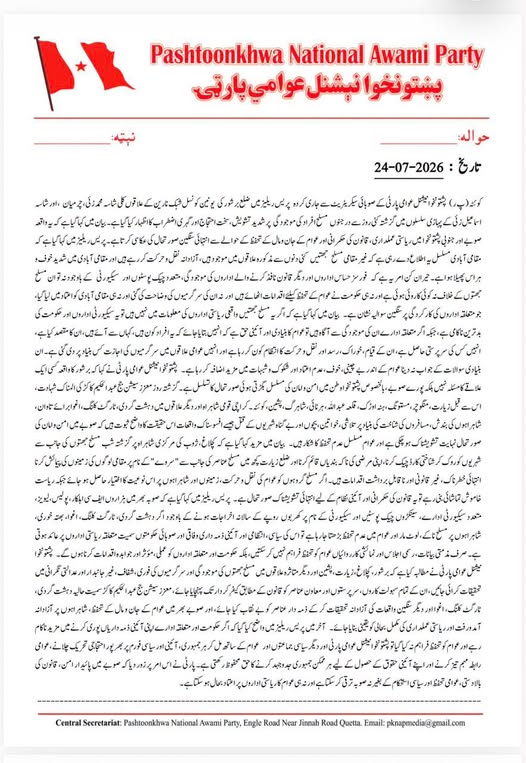
The party said the presence of these groups, despite a heavy footprint of security forces, checkpoints, and intelligence agencies in the area, raised serious questions about state performance. PkNAP argued that either the security establishment was unaware of the groups' presence ; which it called a serious failure, or it was aware and had a constitutional obligation to tell the public who the armed men were, where they came from, who was sponsoring them, and on what basis they were permitted to operate in populated areas.
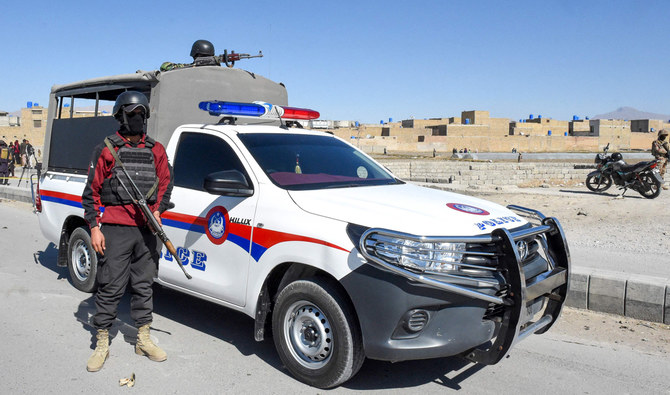
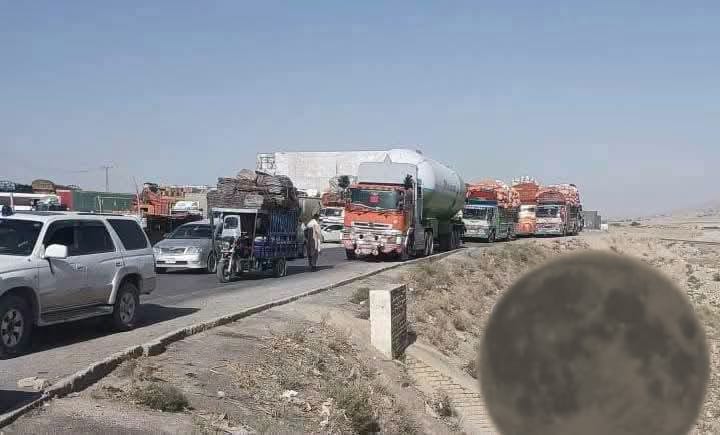
The party linked the Barshore situation to a broader pattern of instability it said has gripped the province, citing the recent killing of Sessions Judge Abdul Hakim Kakar alongside earlier incidents of militancy, targeted killings, kidnappings for ransom, highway closures, and identity-based searches of travelers in Zhob, Ziarat, Mangochar, Mastung, Hanna Urak, Killa Abdullah, Harnai, Shahrag, Pishin, and along the Quetta-Karachi highway. It also said armed men had set up unauthorized checkpoints and checked civilians' identity cards on the main highway in Kuchlak overnight, and that unidentified armed elements had been measuring residents' land in Ziarat district under the guise of a "survey."
PkNAP said that despite thousands of Frontier Corps, police, and Levies personnel and hundreds of checkpoints funded by large annual security expenditure, rising insecurity showed the political, administrative, and constitutional responsibility rested with the federal and provincial governments and relevant institutions and that statements of condemnation alone were not sufficient. The party demanded an immediate, transparent, and judicially supervised investigation into the armed groups' presence and activities, a separate independent probe into Judge Kakar's killing and other recent incidents, and accountability for anyone found to be facilitating these groups. It warned that it reserved the right to launch a protest movement with other parties if the government continued to fail in its constitutional duty to protect the public.
National Party: Mastung Curfew Causing "Humanitarian Crisis," Calls for Dialogue
Separately, National Party Balochistan's provincial president, Aslam Baloch, said a curfew now in its third day in Mastung's Khadkocha area has caused acute shortages of food, medicine, and drinking water, while standing crops, ready vegetables, and fruit are being lost in the fields. He said the people bearing the brunt of the curfew have no connection to any organization or to militancy of any kind, and described the prolonged lockdown as giving rise to a humanitarian crisis.
Aslam Baloch argued that curfews and coercive measures are not a solution, and called instead for a change in approach urging dialogue and negotiation as the path toward lasting peace in the area.
Pakistan Peoples Party: Backs Military Operation, Stands with Army
In contrast, PPP leader Sadiq Umrani said the Balochistan government would use all available resources to restore peace in the province, and stated that a military operation should be carried out to root out terrorism. He said the Pakistan Peoples Party stands with the Pakistan Army on matters of national security and peace.
Taken together, the three statements reflect a province where political actors agree on the severity of the security situation but diverge sharply on the remedy, ranging from PkNAP's call for transparency and judicial accountability, to the National Party's push for dialogue over coercive measures, to the PPP's explicit backing of a military operation.
This report is based on statements issued by the Pashtoonkhwa National Awami Party, the National Party, and the Pakistan Peoples Party. The Balochistan Dispatch has not independently verified all claims made in these statements and will update this story as further details, including any government or military response, become available.
Published in Balochistan Dispatch, July 25nd, 2026
Comments
Leave a Comment
Your comment will be reviewed before it appears publicly.