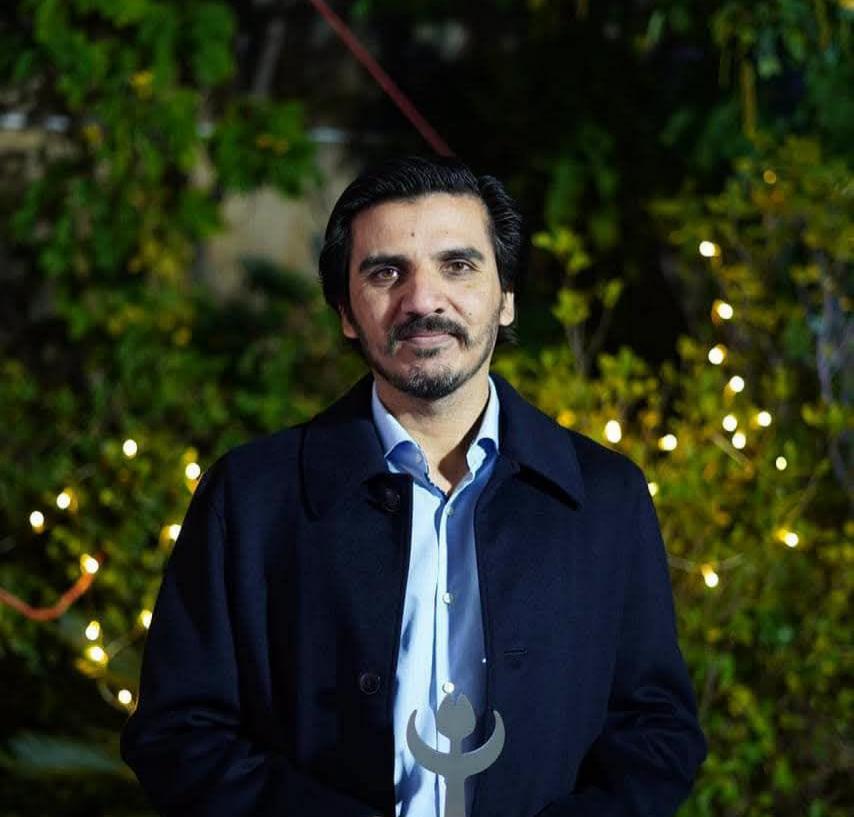
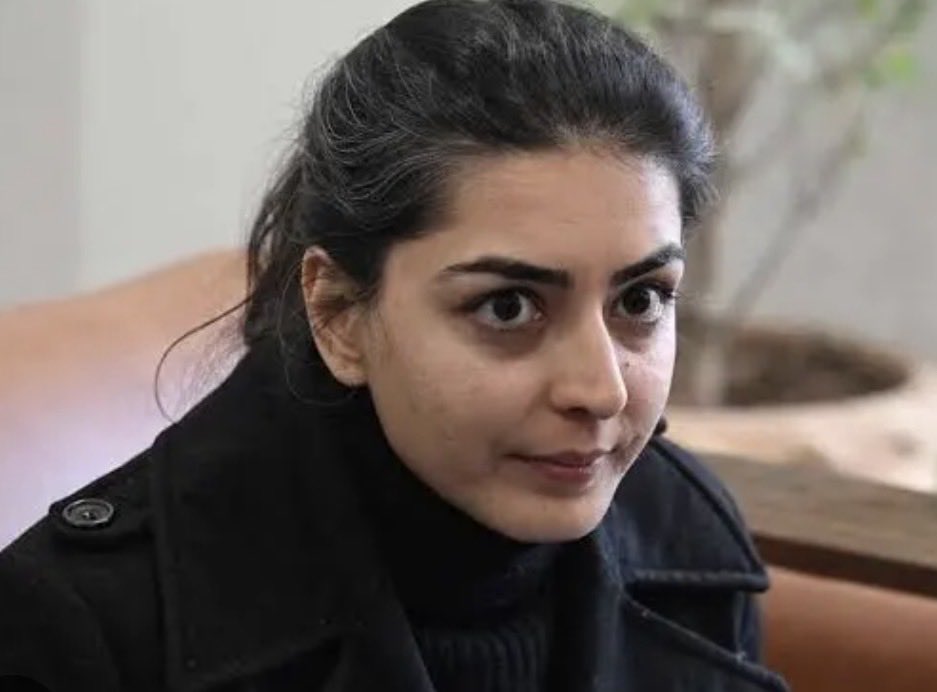
The National Cyber Crime Investigation Agency (NCCIA) has summoned senior journalist Asad Ali Toor to appear before it over the alleged dissemination of "false/fake" information, a move the National Press Club Islamabad has condemned as pressure on press freedom.
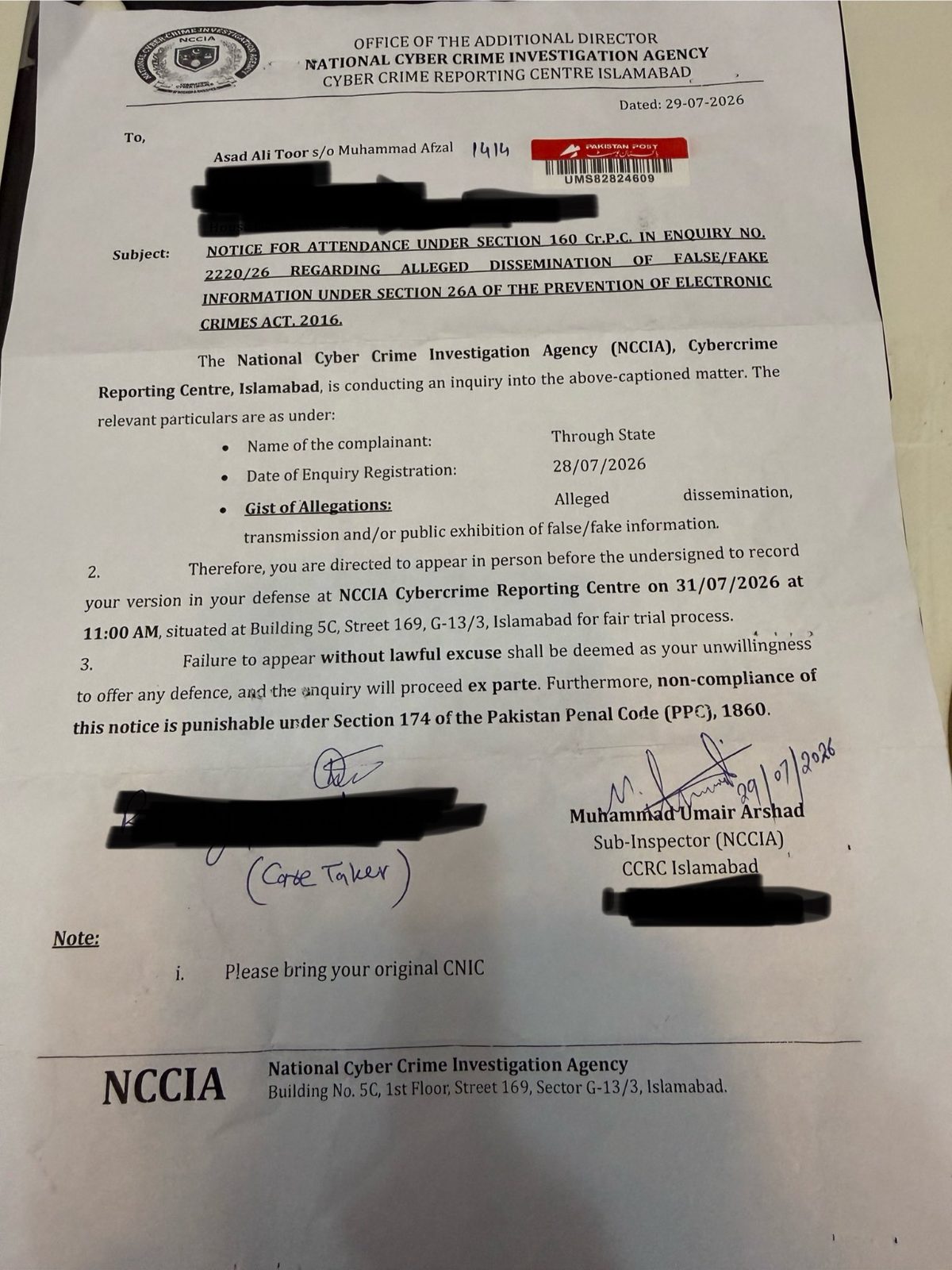
According to a notice dated 29 July 2026, the NCCIA's Cyber Crime Reporting Centre in Islamabad directed Toor to appear in person on 31 July at 11:00am at its office in G-13/3, Islamabad, "to record your version in your defense."
https://x.com/AsadAToor/status/2082421079130382634?s=20
The notice was issued under Section 160 of the Code of Criminal Procedure (Cr.P.C.) in Enquiry No. 2220/26, registered on 28 July, in connection with the alleged "dissemination, transmission and/or public exhibition of false/fake information" under Section 26A of the Prevention of Electronic Crimes Act (PECA), 2016. The complainant is listed as "the State."
The notice warns that failure to appear without lawful excuse will be treated as unwillingness to offer a defence and that the enquiry will proceed ex parte, adding that non-compliance is punishable under Section 174 of the Pakistan Penal Code. Toor was directed to bring his original CNIC. The notice was signed by a sub-inspector of the NCCIA.
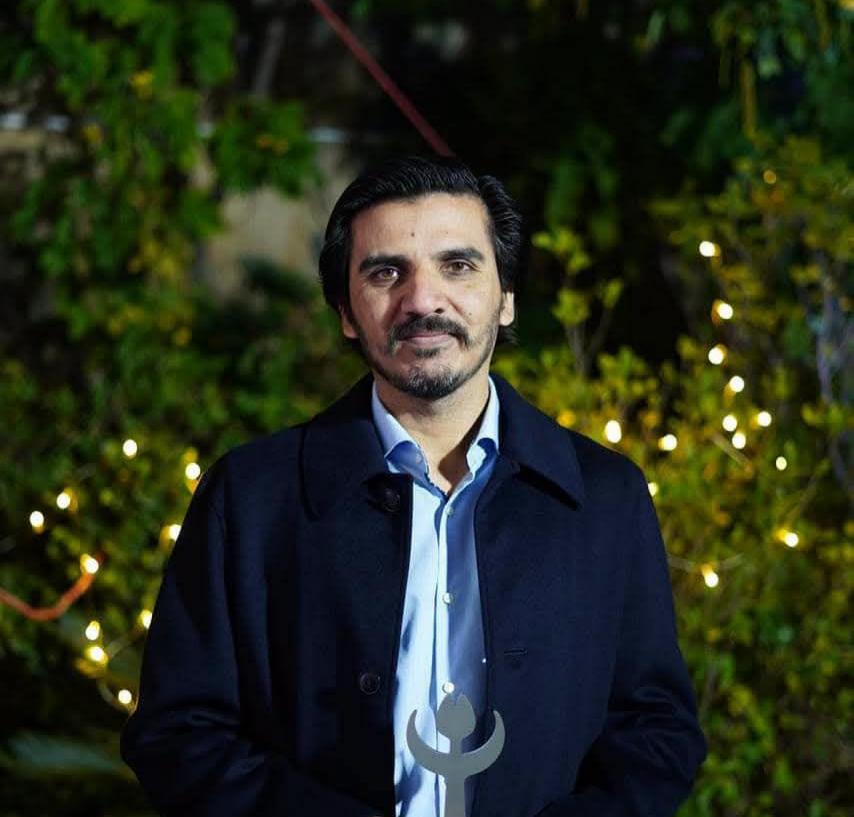
Toor is a Pakistani journalist who reports from the Supreme Court of Pakistan and runs the YouTube channel "Asad Toor Uncensored," which is known for critical commentary on state institutions, the judiciary, and the military, and for coverage of enforced disappearances. A former producer at Aaj News, he has faced repeated legal and physical pressure over the years. He was assaulted by unidentified men at his Islamabad home in May 2021, and was arrested and later jailed by the Federal Investigation Agency (FIA) in a cybercrime case in early 2024.
Section 26A was added to PECA through the Prevention of Electronic Crimes (Amendment) Act, 2025. It criminalises the intentional online dissemination of information a person knows, or has reason to believe, to be false or fake and likely to cause fear, panic, or unrest, carrying penalties of up to three years' imprisonment and a fine of up to Rs 2 million.
The provision has drawn sustained criticism from rights bodies including the Human Rights Commission of Pakistan and Amnesty International and from journalist unions, who argue that the terms "false" and "fake" are left undefined and that the section can be used against journalists, whistleblowers, and critics. The NCCIA is the agency tasked with enforcing it.
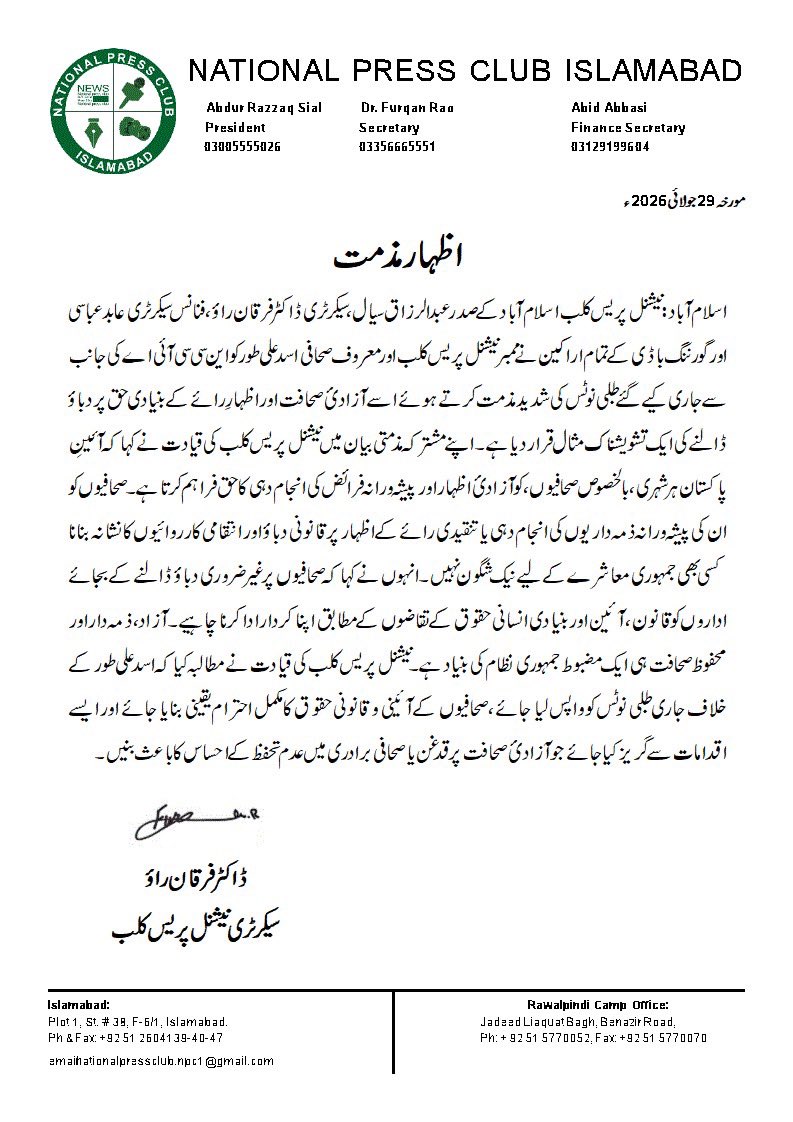
In a statement issued on 29 July, the National Press Club Islamabad through its president Abdur Razzaq Sial, secretary Dr Furqan Rao, finance secretary Abid Abbasi and governing body strongly condemned the notice served on Toor, a club member, describing it as an example of pressure on the fundamental rights to press freedom and freedom of expression.
The club said the Constitution of Pakistan guarantees every citizen, and journalists in particular, the right to free expression and to perform their professional duties, and that making journalists the target of legal notices or administrative action for their work or critical opinion was not a healthy sign for any democratic society. Instead of placing undue pressure on journalists, it said, institutions should act in accordance with the law, the Constitution, and fundamental human rights, adding that free, responsible, and safe journalism is the foundation of a strong democratic system.
The Press Club demanded that the notice issued against Toor be withdrawn, that the constitutional and legal rights of journalists be fully respected, and that steps which create a sense of insecurity within the journalist community and curtail press freedom be avoided.
Published in Balochistan Dispatch, July 29th, 2026
Comments
Leave a Comment
Your comment will be reviewed before it appears publicly.