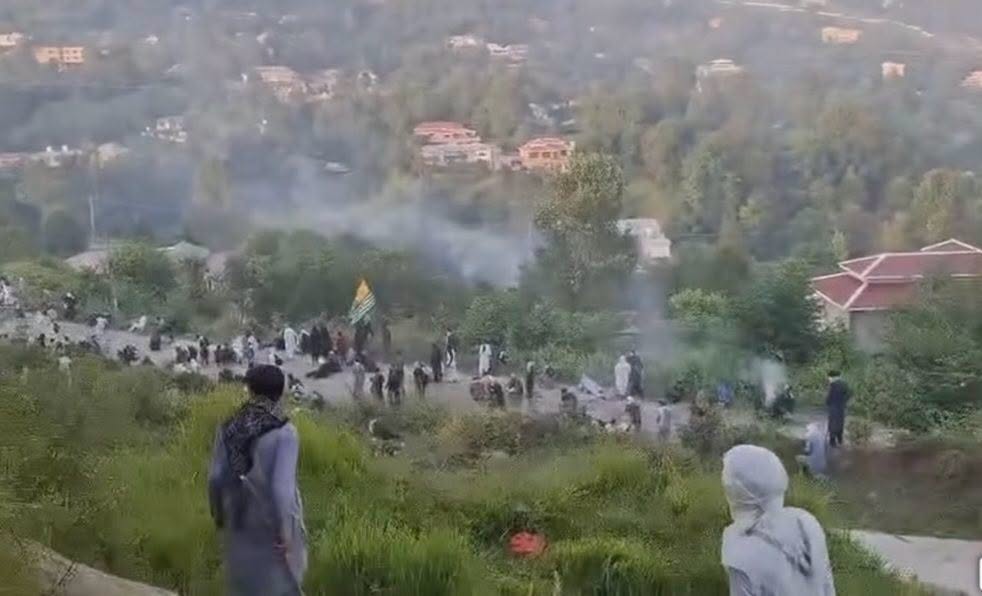
The Awami Workers Party (Marxist), has condemned what it described as a violent state crackdown on protesters in Rawalakot, as Azad Jammu and Kashmir (AJK) grapples with the bloodiest day in months of unrest led by the banned Joint Awami Action Committee (JAAC). The death toll from the 27 July clashes remains disputed.
In a statement, the AWP-M condemned the "violent crackdown against unarmed protestors" who have organised for nearly two months under the JAAC, and criticised what it called a media blackout of the events. The party said dozens of civilians had been killed in recent weeks and described the events of 27 July as
"a descent into total state barbarism."
The AWP-M said the JAAC represents the aspirations of most of AJK's people and accused the state of refusing to acknowledge civilian grievances in the region, drawing comparisons with Balochistan, Khyber Pakhtunkhwa, Sindh and Gilgit-Baltistan. It characterised the holding of elections in Mirpur division on the same day as evidence of what it called a
"colonial-style occupation."
The party demanded justice for those killed, "exemplary punishment" for the civilian and military officials it alleged had ordered the crackdown, and the immediate acceptance of all JAAC demands.
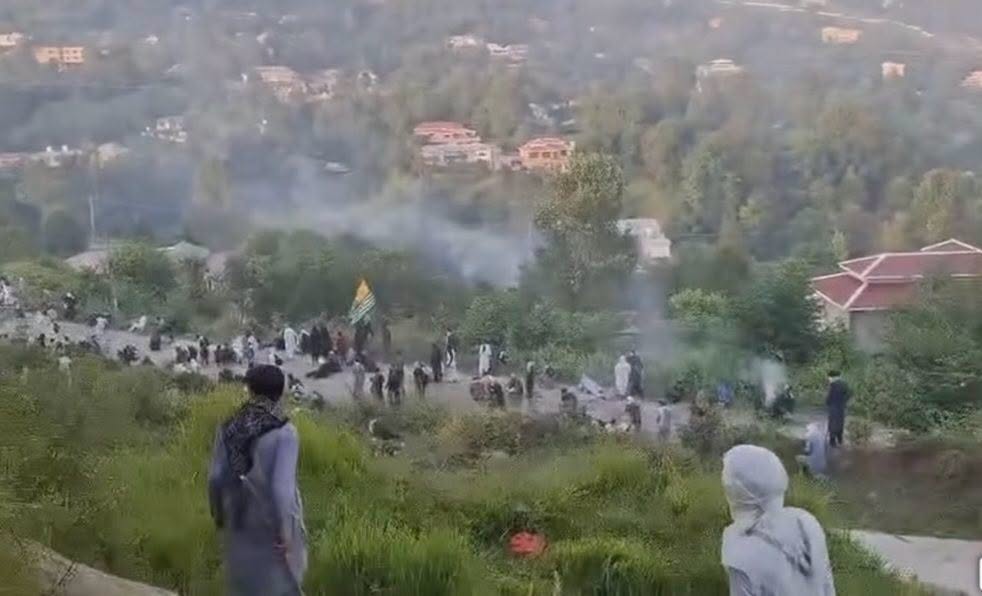
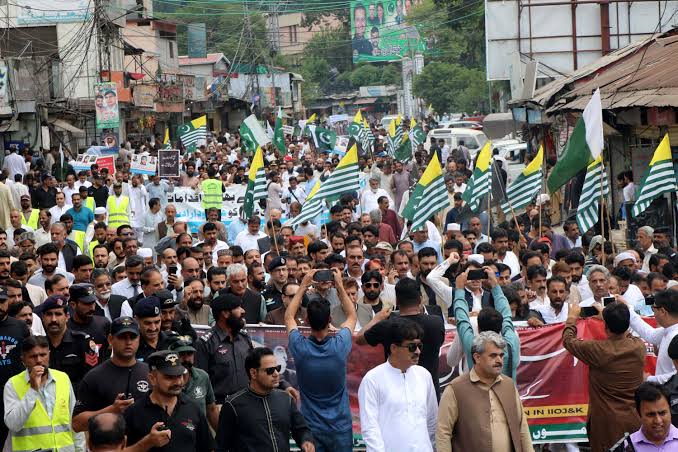
the condemnation follows clashes in Rawalakot on Monday, 27 July, when thousands of JAAC supporters camped for weeks on the city's outskirts attempted to march toward the regional capital, Muzaffarabad. The violence coincided with the first phase of AJK's legislative assembly elections, held that day in Mirpur division.
The number of dead remains contested. The JAAC said at least 25 of its supporters were killed during two days of violence, a figure it later raised to 31; police reported that two security personnel were killed. Independent estimates of Monday's dead reported by news outlets ranged from around seven to about 21. Authorities disputed the JAAC's toll, which news agencies said they could not independently verify. By official accounts, roughly 40 people protesters and security personnel had died in the wider unrest before 27 July.
Pakistan's federal government has backed the AJK administration's response. Federal ministers said those involved in the violence would be treated as "rioters" rather than protesters and alleged that the group was "foreign backed." AJK police said the protesters were armed, opened fire on security personnel, attacked a security post and set police and military vehicles ablaze after ignoring repeated warnings to disperse. The JAAC maintains that its march was peaceful and that its supporters were fired upon.
The JAAC, an umbrella movement of traders, lawyers and students that initially pressed for economic and governance reforms, was recently banned under anti-terrorism laws. Its more recent demands have centred on abolishing 12 AJK assembly seats reserved for Kashmiri refugees living in Pakistan, following a Supreme Court decision upholding those seats. There have also been reports of the suspension of internet and communications services in parts of the region. Further phases of the AJK election are scheduled for Muzaffarabad on 2 August and Poonch division on 10 August.
Published in Balochistan Dispatch, July 29th, 2026
Comments
Leave a Comment
Your comment will be reviewed before it appears publicly.