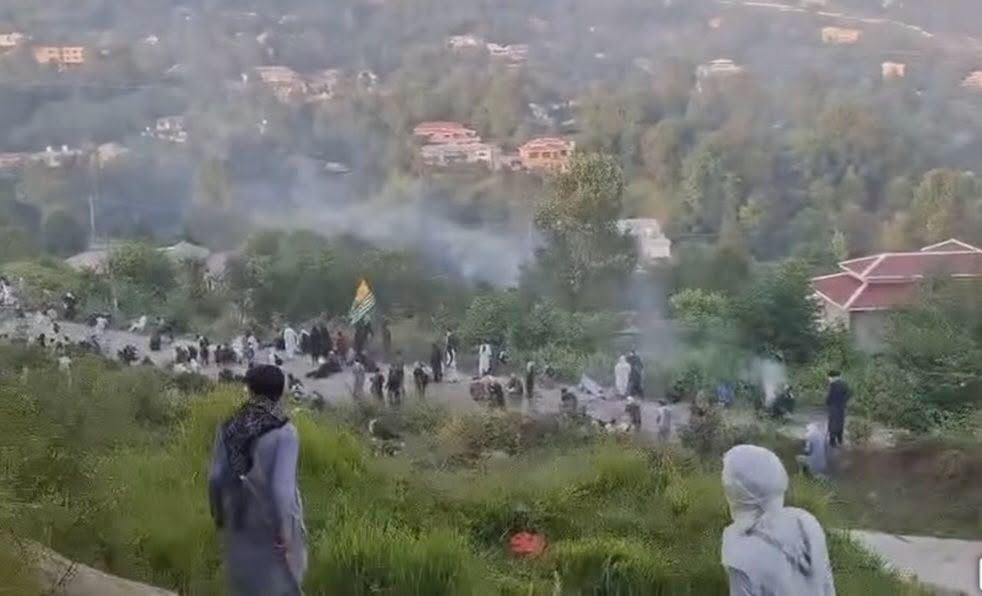
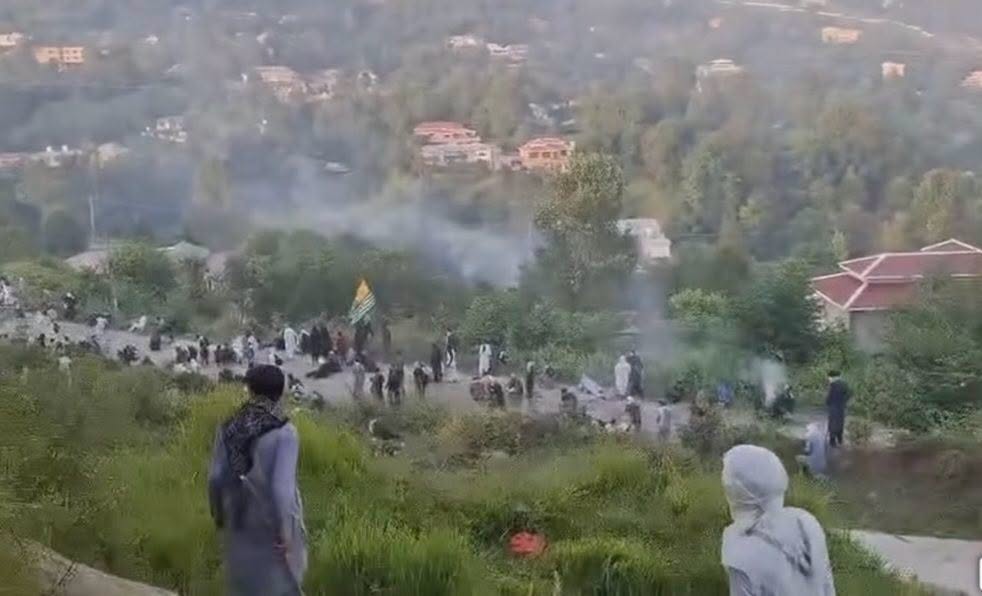
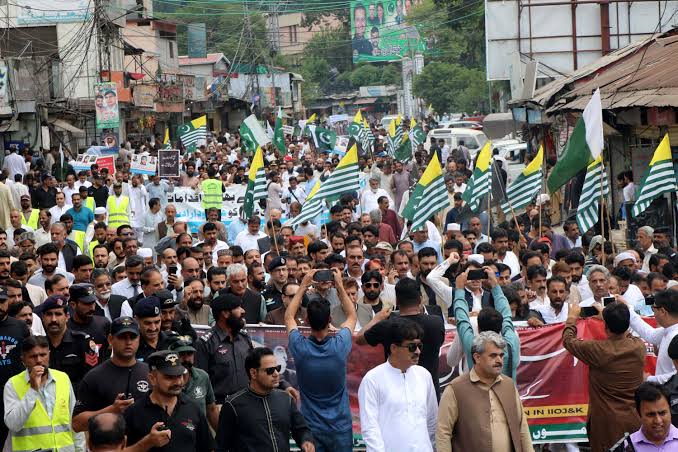
For nearly two months, Pakistan-administered Kashmir has been engulfed in one of the most significant periods of civil unrest in its recent history. What began as protests over economic hardship, governance, and political representation has evolved into a wider movement demanding accountability, electoral reforms, and an end to elite privilege at the expense of ordinary citizens. The crisis has since been marked by curfews, communication blackouts, deadly confrontations, and a growing erosion of public trust in state institutions.
The movement did not emerge in isolation. It is the culmination of years of frustration over limited economic opportunities, inadequate infrastructure, poor internet connectivity, under-resourced education and healthcare systems, neglected roads, rising living costs, and a governance structure that Kashmiris believe has remained distant from the everyday realities of ordinary people. As the protests spread across Rawalakot, Muzaffarabad, Mirpur, Kotli, and other parts of the region, the demands broadened from economic relief to calls for meaningful political reforms, greater transparency, and institutions that genuinely represent the people they serve.
As tensions escalated, so did the human cost. Protest leaders and local activists claim that more than 80 civilians have lost their lives since the sit-in began on 7 June 2026. Among those reportedly killed were a PhD scholar from Quaid-i-Azam University, Islamabad, a medical doctor, and several youths.
Their deaths have come to symbolize the heavy price paid by ordinary citizens in their pursuit of dignity, justice, economic relief, and political reform.
Reports of fatalities in Rawalakot, Mirpur, and, most recently, Kotli have left communities grieving and further intensified public anger across the region.
The consequences of the unrest extended far beyond the protest sites. For nearly two months, internet services remained suspended across the region, disrupting education, businesses, journalism, and everyday communication. Schools, colleges, universities, and vocational training centres remained closed, forcing examinations to be postponed and leaving thousands of students uncertain about their academic future. Businesses suffered heavy losses, banks remained closed for prolonged periods, and many communities reported shortages of essential commodities, including food and medicines. The communication blackout also severely restricted independent reporting, limiting both national and international media coverage of the unfolding crisis. In today's interconnected world, prolonged communication restrictions are not merely an inconvenience; they affect education, livelihoods, access to information, emergency services, and the basic functioning of society.
The timing of the restoration of internet services has become another source of controversy. Connectivity was partially restored in the Mirpur Division shortly before the first phase of the elections and later resumed in Muzaffarabad ahead of the second phase. Many residents viewed this sequence with scepticism, arguing that internet access returned only when it became politically convenient. Whether that perception reflects official intent or not, it has further weakened public confidence in the electoral process.
The elections themselves have remained at the center of public debate. For the first time in the region's history. the electoral process has reportedly been conducted in three separate phases, covering the Mirpur, Muzaffarabad, and Poonch divisions. While the authorities have described the phased schedule as an administrative arrangement, observers have questioned both its timing and its credibility.
Following the reported killings of protesters, many residents publicly called for a boycott of the elections. Videos and photographs widely circulated on social media from the first phase of polling in the Mirpur Division appeared to show deserted polling stations and minimal voter participation. Protesters and local observers argue that these images stand in sharp contrast to the official results, which reported voter turnout in the thousands. These claims require independent scrutiny. Regardless, the apparent disconnect between the visual evidence shared by residents and the official figures has deepened public skepticism about the transparency and credibility of the electoral process. Ultimately, democracy derives its legitimacy not only from holding elections but also from the confidence of the people in the fairness and integrity of those elections.
The crisis in Pakistan-administered Kashmir also raises uncomfortable questions about consistency. For decades, Pakistan has condemned India's policies in Indian-administered Jammu and Kashmir, citing civilian killings, prolonged curfews, communication blackouts, restrictions on political freedoms, and the excessive use of force against protesters as evidence of democratic failure and human rights violations.
Today, residents of Pakistan-administered Kashmir contend that they are experiencing similar restrictions while demanding economic relief, political reforms, and electoral transparency. They point to allegations of civilian deaths, extended internet shutdowns, restrictions on movement, and an atmosphere of fear that, in their view, echoes many of the practices Pakistan has long criticized across the Line of Control.
The comparison becomes even more striking as political mobilization intensifies on both sides of Kashmir. In Indian-administered Jammu and Kashmir, Chief Minister Omar Abdullah has announced plans for public protests demanding the restoration of statehood and constitutional rights, arguing that promises made by New Delhi remain unfulfilled. At the same time, protesters in Pakistan-administered Kashmir continue to press for economic justice, democratic reforms, and greater political accountability. The grievances are different, but the underlying demand is remarkably similar: people seeking to be heard rather than ignored.
If Pakistan seeks to advocate credibly for the rights of Kashmiris internationally, it must be willing to uphold those same principles within the territory it administers. The defence of democracy and human rights cannot depend on which side of the Line of Control is under discussion. Their moral force lies precisely in their universality.
Equally concerning has been the limited international attention devoted to the unfolding crisis.
Human rights cannot become selective principles whose importance depends upon geography or political convenience.
Allegations of civilian deaths, restrictions on communication, and concerns regarding democratic processes deserve careful and impartial scrutiny wherever they occur. International human rights organizations, independent media, and civil society have a responsibility to examine such developments objectively and consistently.
Ultimately, this is about far more than elections or internet shutdowns. It is about people demanding dignity, accountability, and a meaningful voice in shaping their future. Every civilian life lost is a tragedy, regardless of political affiliation or geography. History has repeatedly shown that force may suppress unrest for a time, but it cannot extinguish a people's desire for dignity, justice, and accountable governance. If democracy and human rights are to retain their meaning, they must remain universal principles, applied consistently, defended impartially, and never conditioned by political expediency.
Published in Balochistan Dispatch, July 30th, 2026
Comments
Leave a Comment
Your comment will be reviewed before it appears publicly.